





dimensions
15 x 46 x 15 cm
additional Information
Nymphs of the Greek Mythology
The Nymph “Calypso”
Description
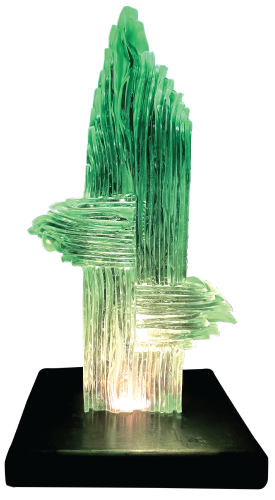
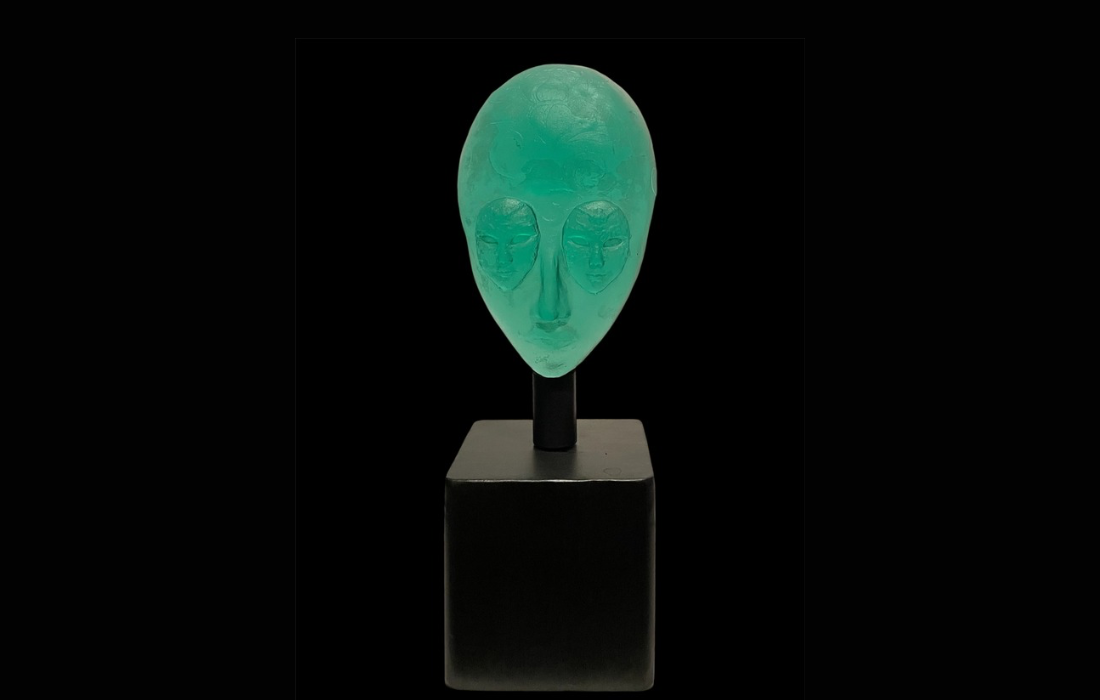
The Nymph “Calypso” is a commanding contemporary sculpture cast from premium green Czech crystal glass, celebrated for its purity, weight, and luminous depth. Rising 46 cm tall, the sculpture presents Calypso’s face in a multi‑layered, shifting form — a visual echo of her mythological power to enchant, detain, and transform.
The polished back surface intensifies the internal radiance of the crystal, allowing light to travel through the sculpture and reveal its intricate contours. Mounted on a handmade metal base, this 8.6‑kg artwork has the presence and gravitas expected of museum‑level collectible glass.
In Greek mythology, Calypso is the Oceanid nymph, daughter of the Titan Atlas, who lived on the island of Ogygia. She detained Odysseus for seven years, offering him immortality and eternal love. This sculpture captures her dual nature — seductive, powerful, and eternally suspended between desire and destiny.
Part of the Crystal Echoes – The Nymphs collection, Calypso merges mythological storytelling with refined glass craftsmanship, making it an exceptional piece for international galleries, curators, and private collectors seeking works that combine narrative depth with sculptural brilliance.
A unique, one‑of‑a‑kind crystal casting, Calypso stands as a luminous embodiment of myth, femininity, and timeless allure.
dimensions
15 x 46 x 15 cm
additional Information